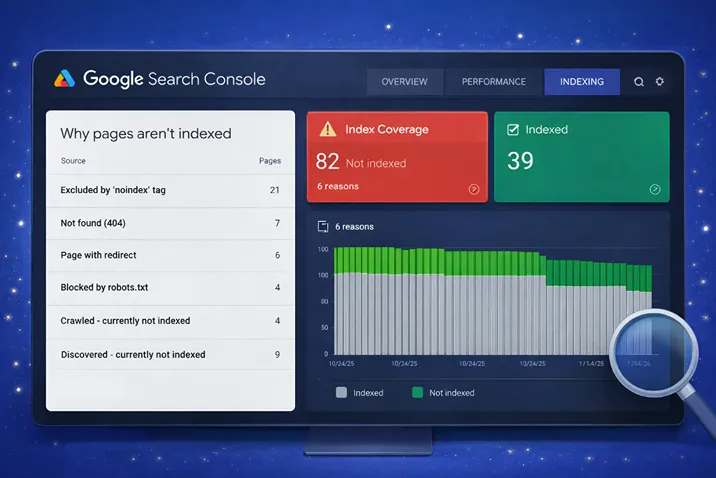
Discovered currently not indexed means Google has detected the URL but has not added it to the search index. The page exists in Google's system, yet it has not been crawled fully or selected for inclusion.
If this status lasts more than several weeks, it signals that Google has deprioritised the page. Until indexing happens, the page cannot rank or generate impressions. This is not a keyword optimisation issue. It is a crawl allocation and structural importance issue.
Google evaluates whether the page adds meaningful value compared to existing content. If the page does not demonstrate sufficient differentiation or structural importance, indexing is delayed.
Confirm the Real Indexing Status First
Before making any changes, verify the page state using URL Inspection in Search Console.
- Whether it says URL is not on Google
- The last crawl date
- Crawl allowed status
- Canonical selection
Shows the page is indexed
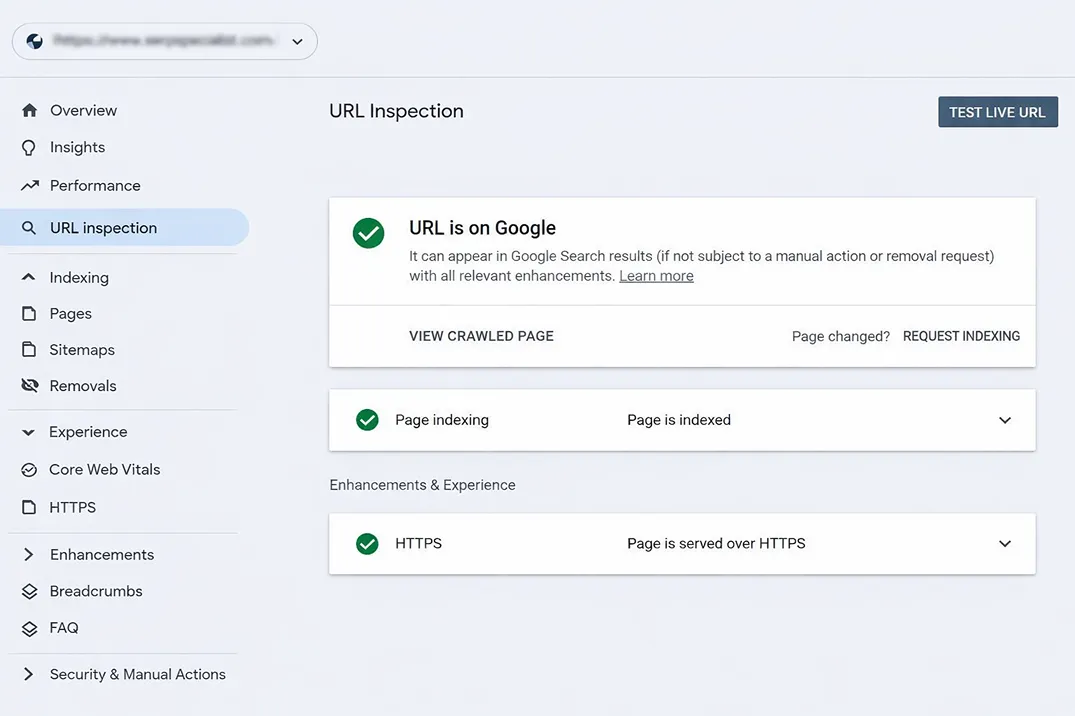
URL Inspection confirming the page is indexed
Shows the page can be indexed
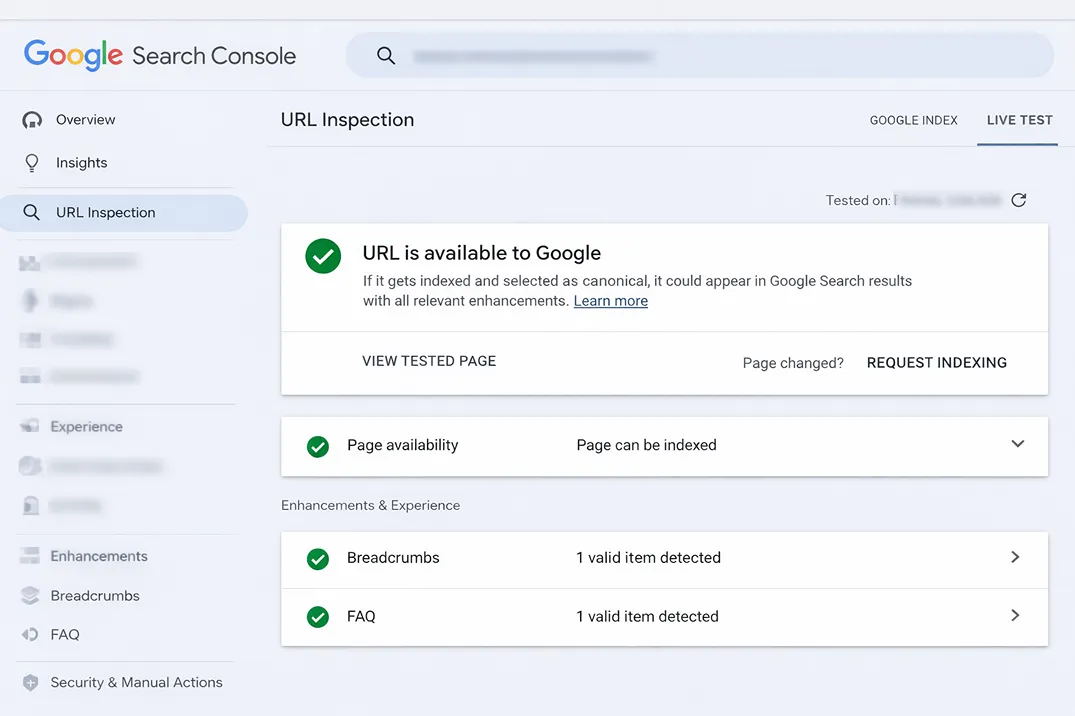
URL Inspection showing the page is eligible for indexing
If the page has not been crawled recently, crawl allocation is the issue. If it was crawled but not indexed, duplication or limited value may be influencing the decision.
Clear diagnosis prevents wasted effort.
Why Google Does Not Prioritise Certain Pages
Google allocates crawl resources based on perceived importance within a site. Pages often remain in discovery when they show one or more of these patterns:
- Weak contextual internal linking
- Several similar URLs targeting close variations
- High publishing volume relative to crawl frequency
- Limited depth compared to competing content
- Low topical authority in that subject area
Publishing alone does not increase importance. Structural integration, supported by SEO content writing that builds topical depth, does.
If multiple new URLs are added without strengthening internal authority pathways, crawl allocation becomes diluted.
Structural Patterns That Lead to Discovery Stagnation
When several pages remain unindexed, the issue is usually architectural rather than technical. Common structural weaknesses include content fragmentation and internal imbalance. A technical SEO audit can identify these architectural weaknesses before they compound.
Content fragmentation happens when many narrow pages are published instead of building comprehensive resources. This spreads authority thinly across multiple URLs.
Internal imbalance occurs when revenue or core pages receive most of the internal links while newer pages remain isolated.
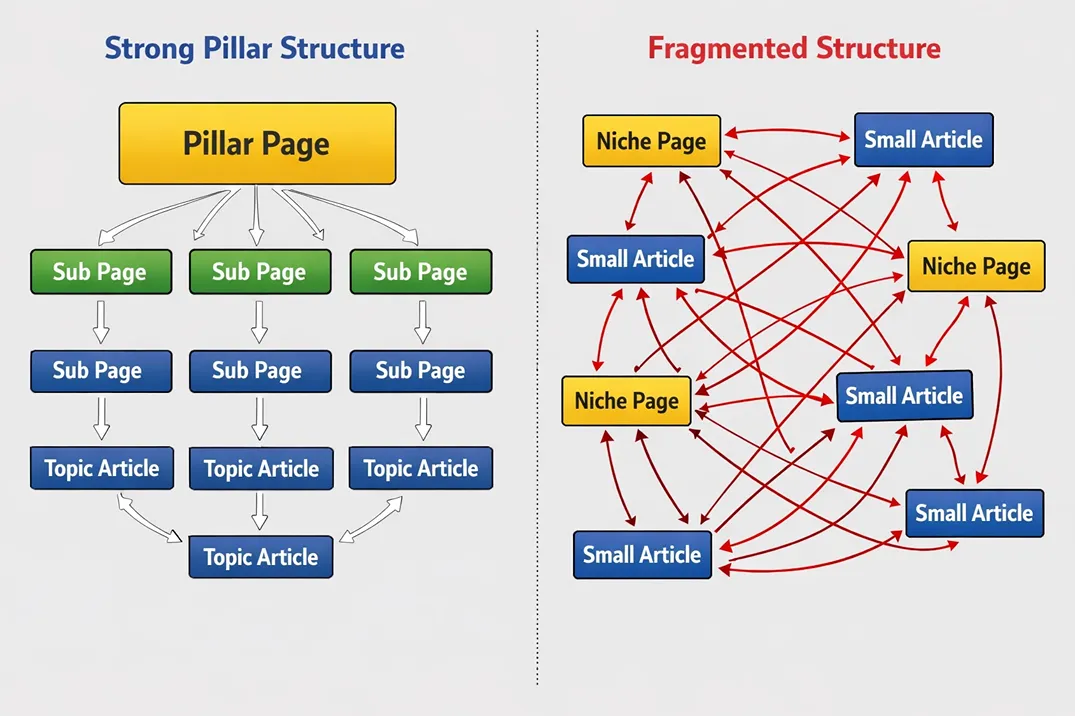
Internal linking diagram showing strong pillar structure versus fragmented structure
Deep crawl depth also reduces priority. Pages that require multiple clicks to reach from the homepage often receive less attention. Structure influences crawl priority more than minor content edits.
Indexing Is Not the Same as Visibility
Indexing and ranking are separate stages in search performance. A page can be discovered but not indexed, indexed but receiving no impressions, or indexed and generating impressions. Each stage requires a different response.
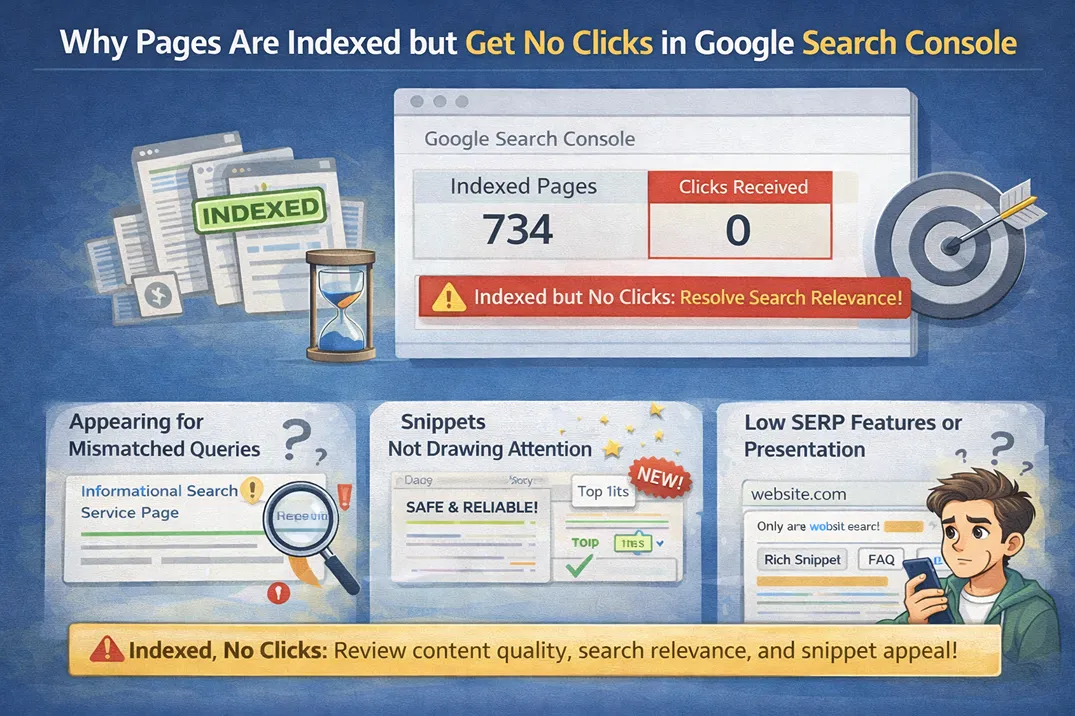
If indexed but receiving no impressions, the issue is likely search intent alignment or competitive strength, as explored in why indexed pages get no clicks. If not indexed, improving keyword placement will not resolve the problem. Crawl signals and structural clarity must be addressed first.
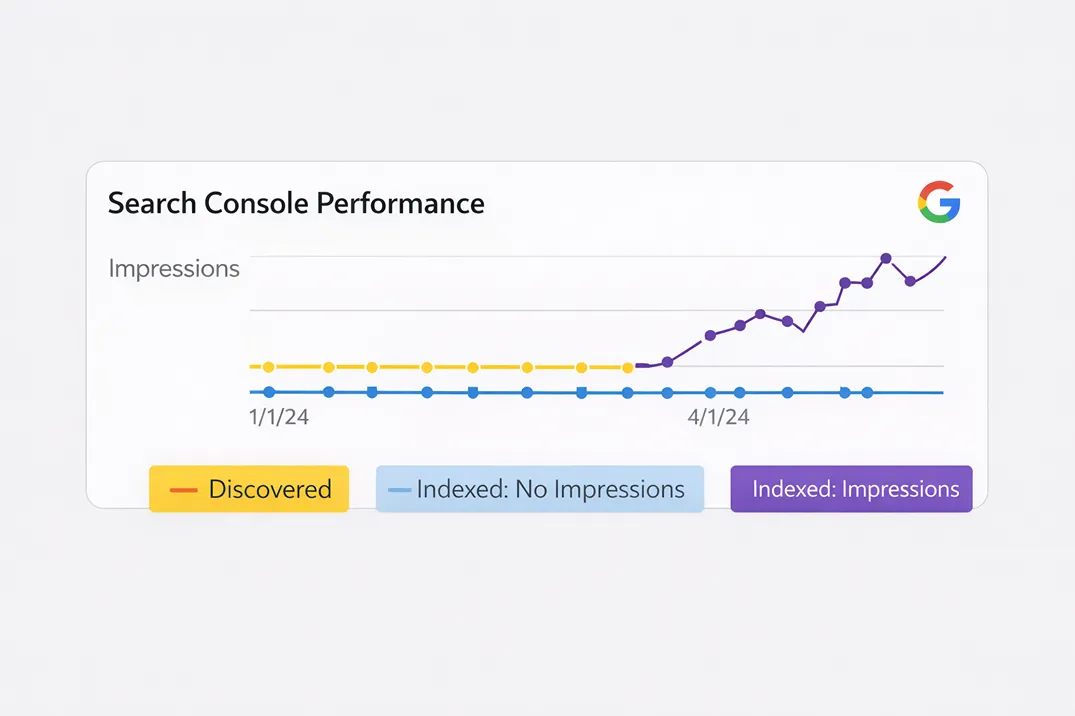
Simulated graph showing impressions trend
Understanding the distinction prevents applying the wrong optimisation strategy.
Deeper Signals That Influence Inclusion
When discovery status persists across important sections of a site, broader signals should be reviewed.
- Crawl frequency across the domain
- Internal anchor text distribution
- Canonical consistency among similar URLs
- Server response stability
- Publishing velocity compared to crawl rate
If content expansion exceeds crawl allocation capacity, indexing delays increase across the site. This becomes a systemic prioritisation issue rather than a single page problem.
Structural Actions That Improve Indexing Probability
When multiple pages remain unindexed, the solution lies in structural refinement. Effective actions include:
- Consolidating overlapping URLs into stronger comprehensive assets
- Strengthening contextual internal links from high authority pages
- Reducing thin or repetitive content
- Improving navigation pathways to priority sections
- Building clearer topic clusters around core themes
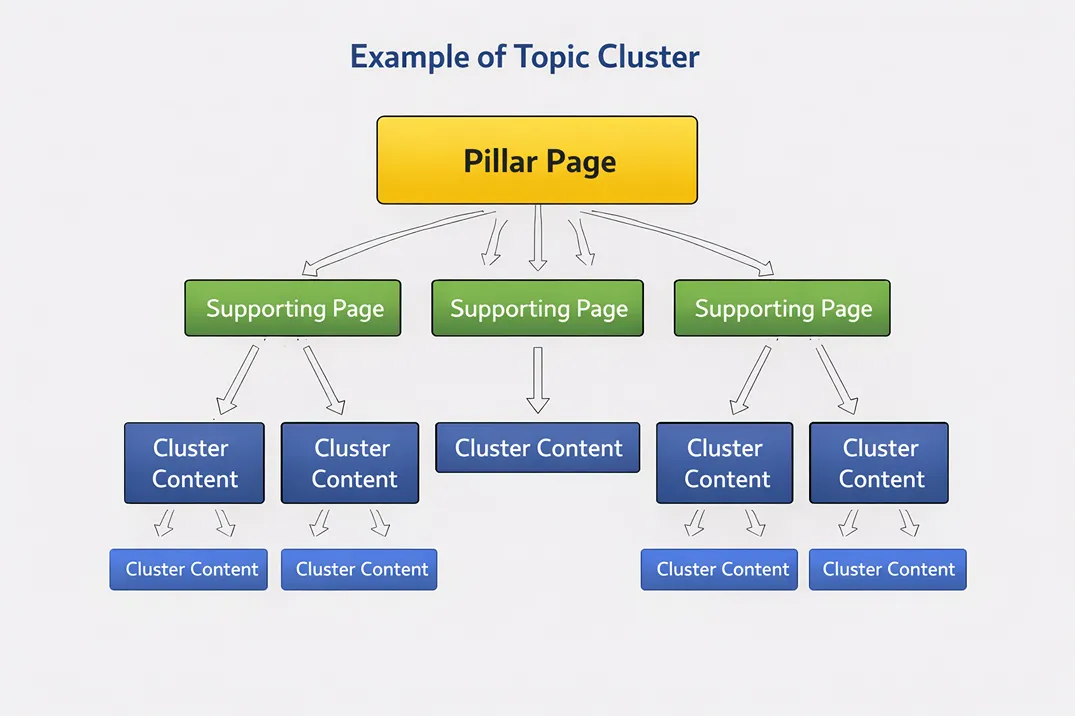
Example of topic cluster layout with pillar and supporting pages
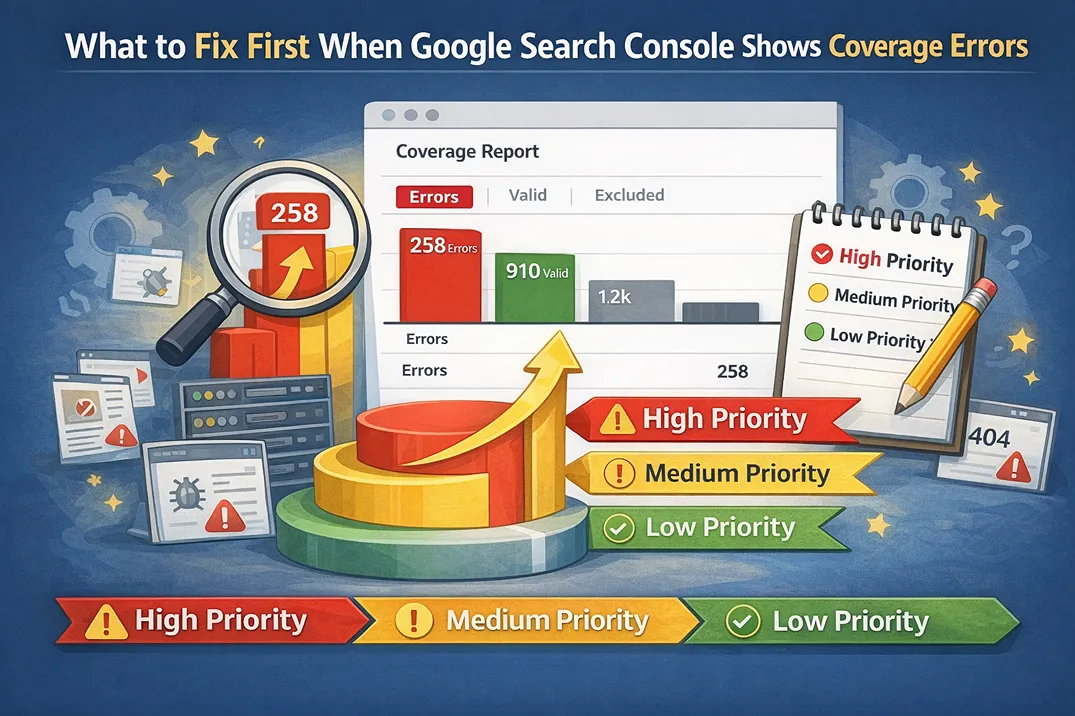
Manual indexing requests may trigger temporary crawling, but they do not change long term prioritisation logic. Inclusion depends on authority concentration and architectural clarity. Understanding which issues to address first is covered in what to fix when Search Console shows coverage errors.
Strategic Perspective
Discovered currently not indexed is not a penalty. It is a signal that the page has not yet demonstrated sufficient importance.
When deciding whether to index a page, Google evaluates how it compares to other URLs within the same domain, how it stands against competing content, how often similar pages are crawled, and how clearly the site structure signals importance.
If inclusion does not occur, the issue is rarely solved through cosmetic edits. It requires stronger internal authority distribution, consolidation of overlapping content, and clearer structural hierarchy. Structure influences importance. Importance influences inclusion.