A technical SEO audit is not a routine task that every website needs on a schedule. Many sites perform well with steady content updates and basic optimisation. A review of technical performance becomes relevant when search visibility issues persist despite continued effort.
In most cases, these issues are not caused by content quality or backlinks. They are caused by technical constraints that prevent search engines from crawling, indexing, or evaluating pages correctly. Until those constraints are identified, further SEO work often produces limited results.
This guide helps business owners, marketing teams, and agencies decide when a technical SEO audit is required, what role it plays, and why it should come before additional optimisation work. It is a decision guide, not a service explanation.
Signs That Indicate a Technical Review Is Required
This section highlights key triggers that suggest a deeper technical review is necessary. These patterns usually appear after site changes or during periods of stalled growth.
A technical SEO audit is often needed when:
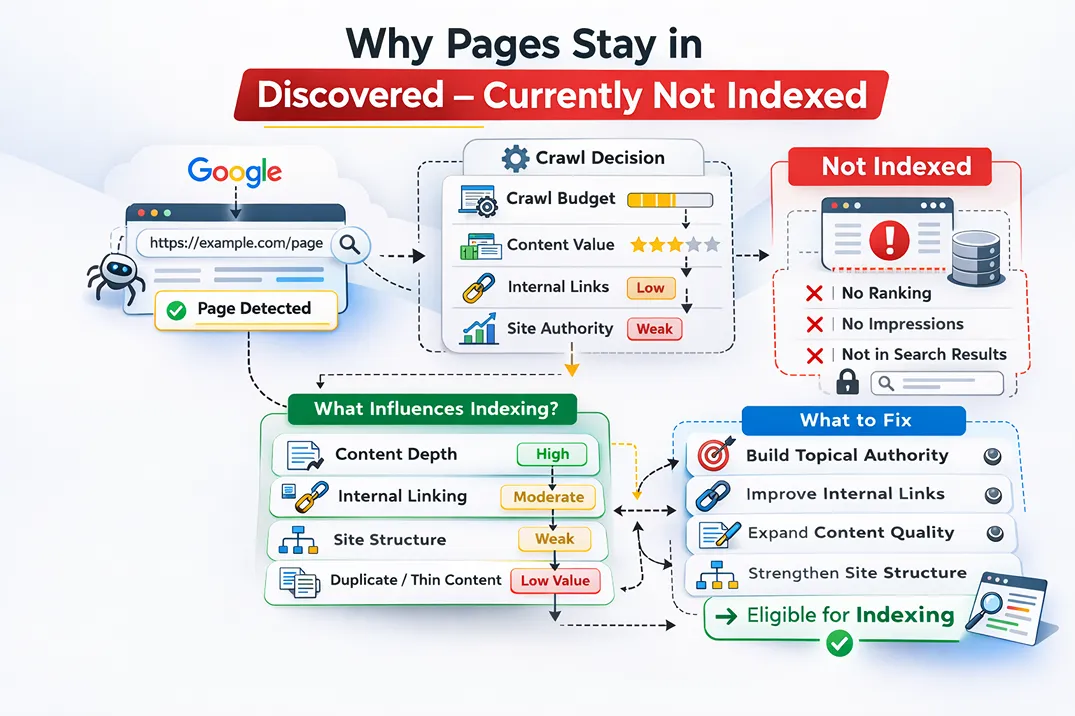
- Pages are published but fail to appear in search results
- Rankings drop after a redesign, CMS change, or migration
- Traffic declines without changes to content or links
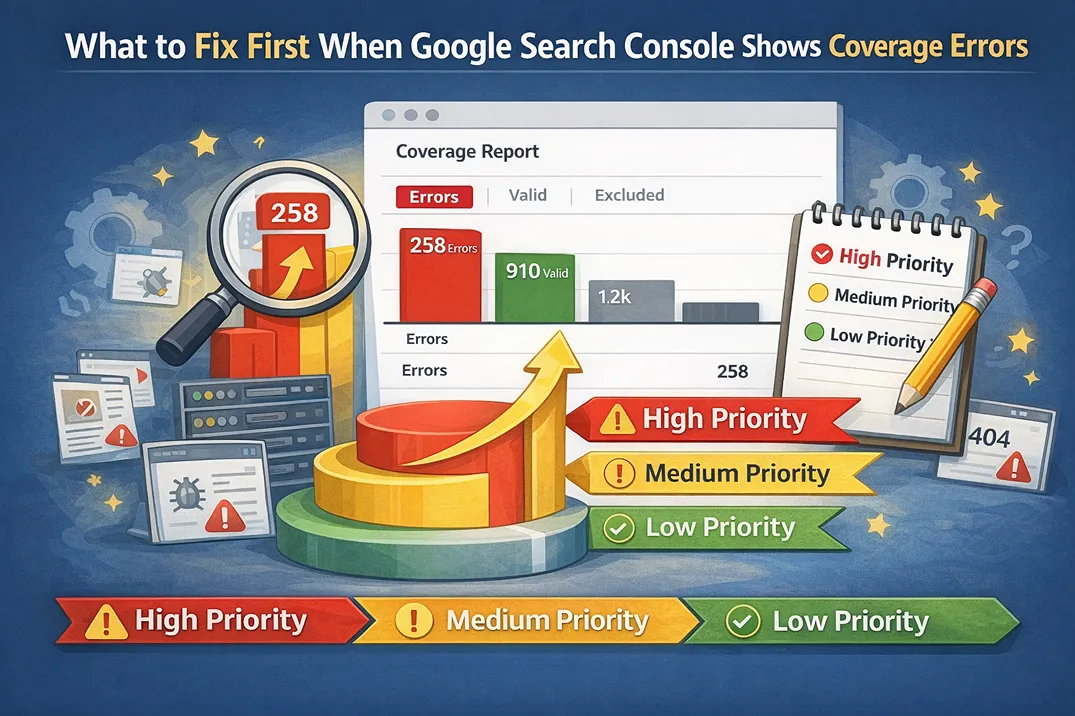
- Google Search Console reports crawl or index coverage issues
- Entire page groups lose visibility at the same time
When these patterns occur, continuing content updates or link activity rarely resolves the issue on its own.
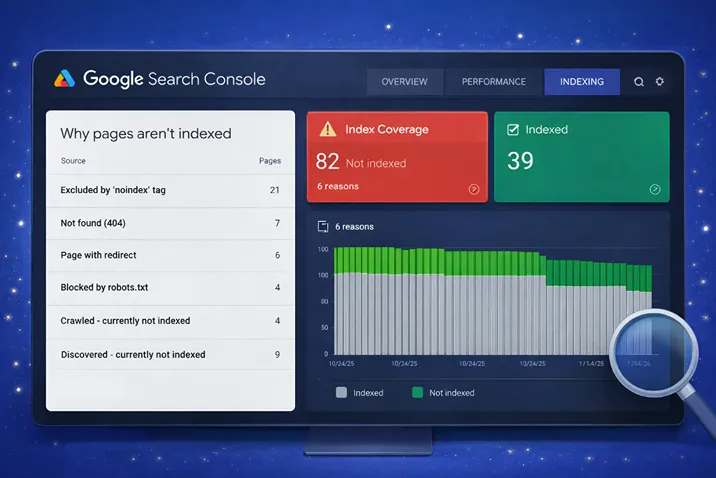
Google Search Console showing crawl errors and indexing issues
Why Content and Links Cannot Fix Technical Barriers
Content and backlinks only influence rankings after a page has been crawled, processed, and indexed correctly. If that process fails, optimisation work applied later has little effect.
Technical barriers interrupt search engines before relevance or authority signals are evaluated. This is why some websites with strong content and established backlinks still struggle to maintain visibility. The issue is not effort, but sequence.
Key takeaway: Until technical constraints are identified and understood, SEO improvements remain speculative rather than effective.
What a Technical SEO Audit Actually Evaluates
This type of audit examines how a website behaves from a search engine's perspective. The focus is on structure, accessibility, and performance rather than messaging or conversions.
The review looks at how URLs are generated, how crawl paths are formed, how internal links distribute signals, and how indexing directives are applied. It also evaluates performance factors that affect crawl efficiency and user experience.
The purpose is diagnosis. The audit documents what is limiting performance and why those limitations exist.

Diagram showing crawlability, indexing signals, internal links, and performance layers
Common Technical Issues Found During Reviews
This section lists issue types because readers scan here to recognise patterns.
Common findings include:
- Duplicate URLs created by filters, parameters, or CMS rules
- Incorrect canonical or noindex signals across page groups
- Crawl traps caused by faceted navigation or infinite paths
- Orphaned pages without internal links
- Slow templates affecting large sections of a site
These issues rarely exist in isolation. Their combined effect can suppress site-wide performance even when individual pages appear optimised.
What This Type of Audit Does Not Do
This type of audit does not improve rankings by itself. It does not publish content, build links, or manage ongoing SEO activity. Its role is diagnostic rather than corrective.
The audit exists to remove uncertainty. It identifies the constraints that block performance so future optimisation work is applied to a foundation search engines can process correctly.

SEO workflow diagram showing audit stage before optimisation tasks
How Technical Findings Should Be Interpreted
Not every technical issue requires immediate action. Some affect a single page, while others influence the entire site. Interpreting findings correctly is as important as identifying them.
Effective interpretation considers how many URLs are affected, whether the issue blocks crawling or indexing, and how it interacts with existing optimisation efforts. Treating all findings equally often leads to wasted development time and delayed results.
This step is where many audits fail to deliver value when prioritisation is not applied.
When an Audit Becomes Necessary Rather Than Optional
A technical SEO audit becomes essential when SEO decisions are being made without reliable diagnostic data. This often occurs during platform changes, site growth, or unexplained performance declines.
At this stage, continuing without a structured review increases risk. Changes are made reactively, fixes are applied without understanding root causes, and SEO work becomes inefficient.
At this point, a technical SEO audit helps confirm whether technical constraints are limiting performance before further optimisation work continues.

Comparison of SEO decisions guided by audit data versus assumptions
Moving From Diagnosis to Resolution
Once technical constraints are identified and prioritised, implementation becomes the next phase. This may involve developers, SEO specialists, or internal teams depending on site complexity.
An audit delivers value only when its findings are reviewed carefully, fixes are documented clearly, and outcomes are monitored after deployment. When used correctly, it prevents repeated SEO rework and aligns optimisation efforts with how search engines actually operate.