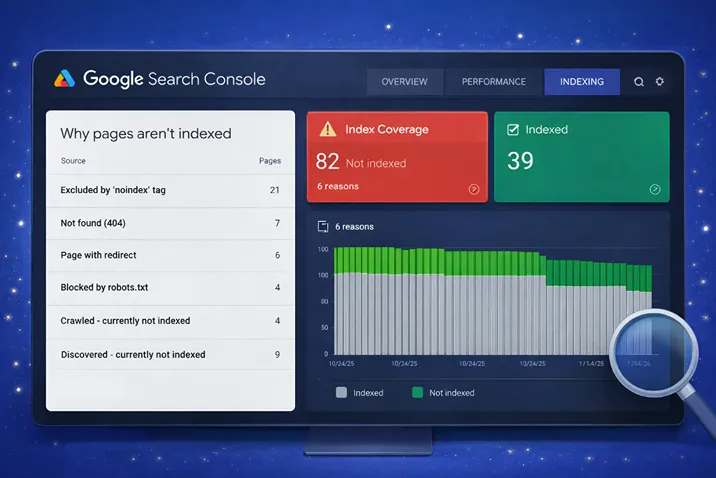
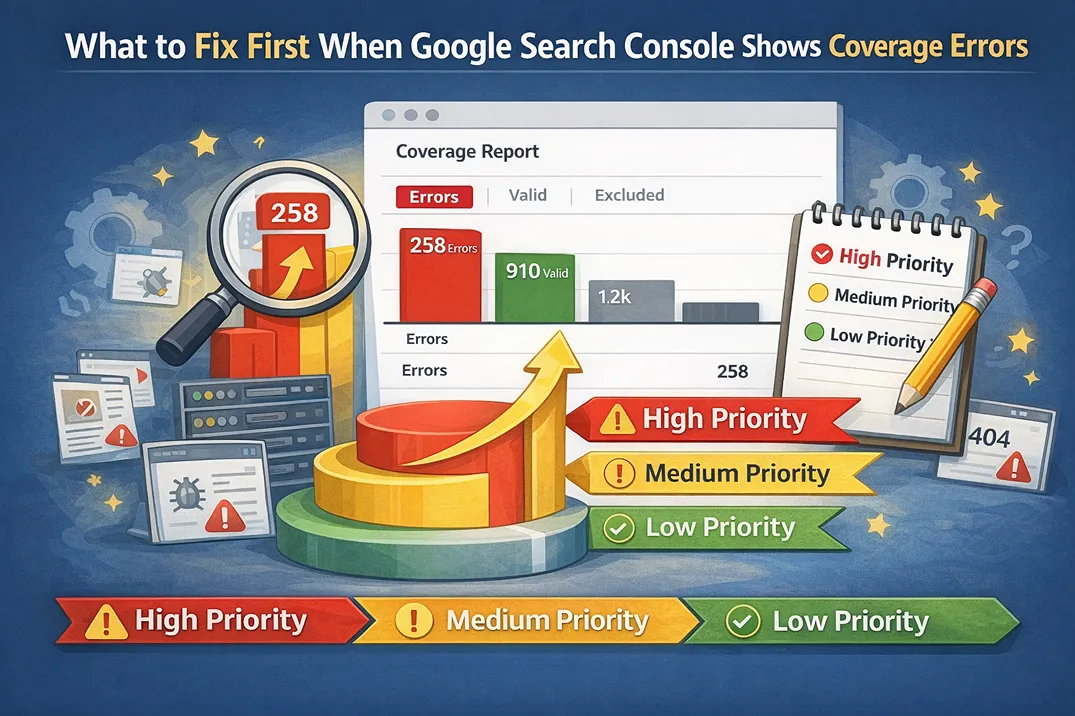
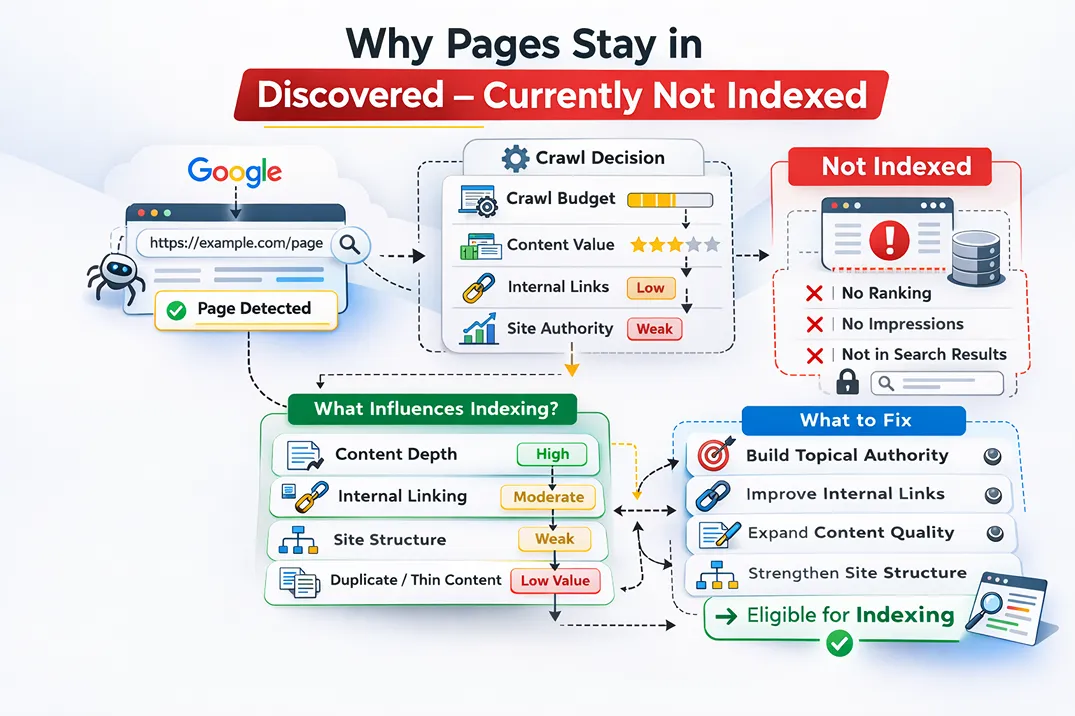
Google Search Console shows impressions for your pages, but clicks stay low or do not increase at all. Pages are indexed, visible in search results, and technically present, yet traffic does not follow. This creates confusion because the site appears to be working, but results do not reflect that visibility.
This situation is frustrating because it feels close to success. Rankings exist, impressions grow, and Google is clearly showing the page. Still, users do not click. Over time, this leads to wasted effort creating content or building pages that never deliver enquiries. Without knowing why clicks are missing, changes are made blindly and often make no difference.
This article explains why indexed pages fail to earn clicks, what signals affect click behaviour, and how to identify whether the issue is technical, structural, or content-related before deciding what to fix.
Why Indexing Does Not Guarantee Traffic
Indexing only confirms that Google can store and reference a page. It does not mean the page is competitive or appealing in search results. Many pages are indexed but fail to attract clicks because they do not stand out or match search intent closely enough.
Common reasons indexed pages get no clicks include:
- Titles that do not match how users search
- Descriptions that fail to explain value
- Pages ranking for broad or unclear queries
- Multiple pages competing for the same terms
Search Console reports impressions without context. It does not show whether the query aligns with what the page offers or whether the page appears alongside stronger competitors. A page may show impressions simply because it loosely matches a term, not because it satisfies intent.
Another issue is internal competition. When several pages target similar topics, Google may rotate which one appears. This leads to impressions being spread across pages, reducing click potential for each.
Indexing is a starting point, not a performance signal. Clicks depend on relevance, clarity, and how well the page aligns with what users expect to see.
Search Result Signals That Reduce Clicks
Low click-through rates are often caused by how a page appears in search results rather than where it ranks. Even positions on the first page can underperform if signals are weak or confusing.
Signals that commonly reduce clicks include:
- Titles rewritten by Google due to poor clarity
- Descriptions that repeat generic wording
- URLs that do not indicate page purpose
- Snippets that fail to answer the query clearly
When Google rewrites titles, it often means the original title does not reflect the page content or intent. This creates mismatch and reduces trust. Users scanning results tend to skip listings that feel vague or repetitive.
Another issue is query mismatch. Pages may rank for informational searches when they are written as service pages, or the opposite. This leads to impressions without engagement because the listing does not align with user expectations.
Clicks drop when users hesitate. Search results are compared quickly, and unclear signals lose attention even if the ranking position is reasonable.
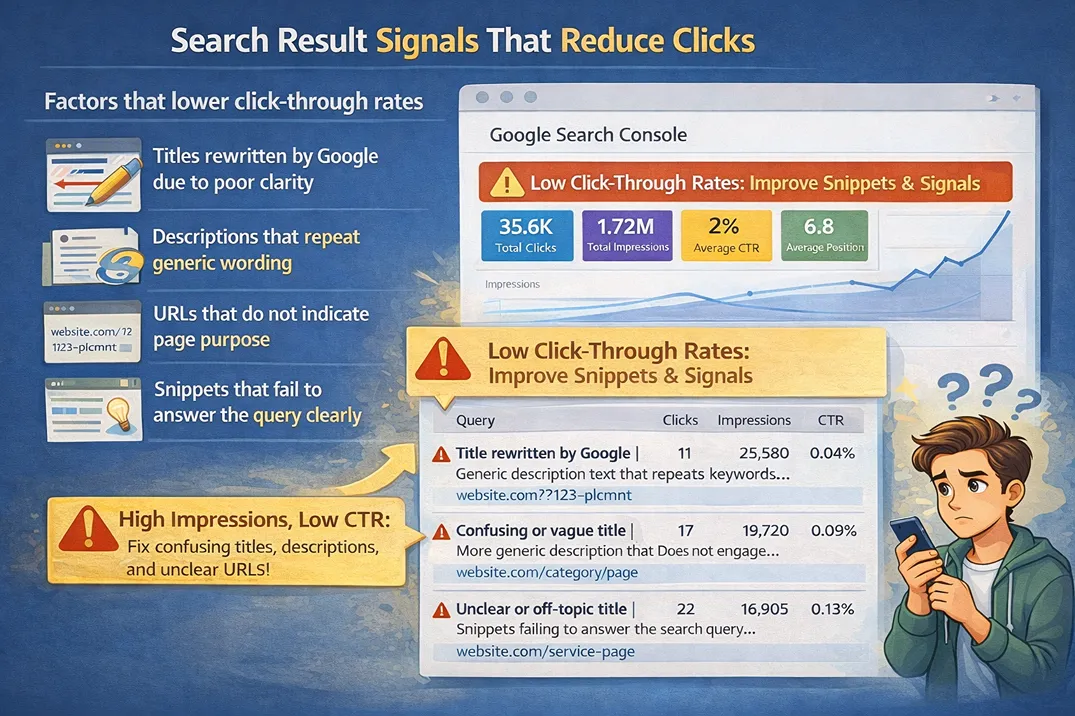
Google Search Console performance report showing impressions and low CTR
How Technical Issues Can Limit Click Potential
In some cases, low clicks are tied to technical structure rather than wording alone. Pages may be indexed correctly but still send weak signals due to internal setup.
Technical factors that affect click performance include:
- Duplicate titles across multiple pages
- Incorrect canonical signals
- Thin supporting content around key pages
- Internal links pointing to the wrong URLs
When Google struggles to determine the primary version of a page, it may rank a weaker variant. This leads to impressions without clicks because the version shown is not the best match for the query.
A technical SEO audit helps identify whether low click performance is caused by indexing conflicts, internal competition, or structural issues that dilute page strength. Without this review, changes to titles or content may not address the real cause.
When Content Is the Main Reason Clicks Do Not Happen
If technical signals are clear, the issue is often content alignment. Pages may rank but fail to communicate relevance or value quickly.
Content-related causes include:
- Headlines that do not reflect search intent
- Pages trying to target too many topics
- Service pages written like general articles
- Blog posts that lack clear focus
Search results reward clarity. Pages that answer one clear intent tend to earn higher engagement. When content is vague or overloaded, users skip the result even if it ranks.
In these cases, SEO content writing focuses on tightening page intent, improving structure, and aligning language with how users search. This increases relevance signals and improves the likelihood of clicks without chasing new keywords.
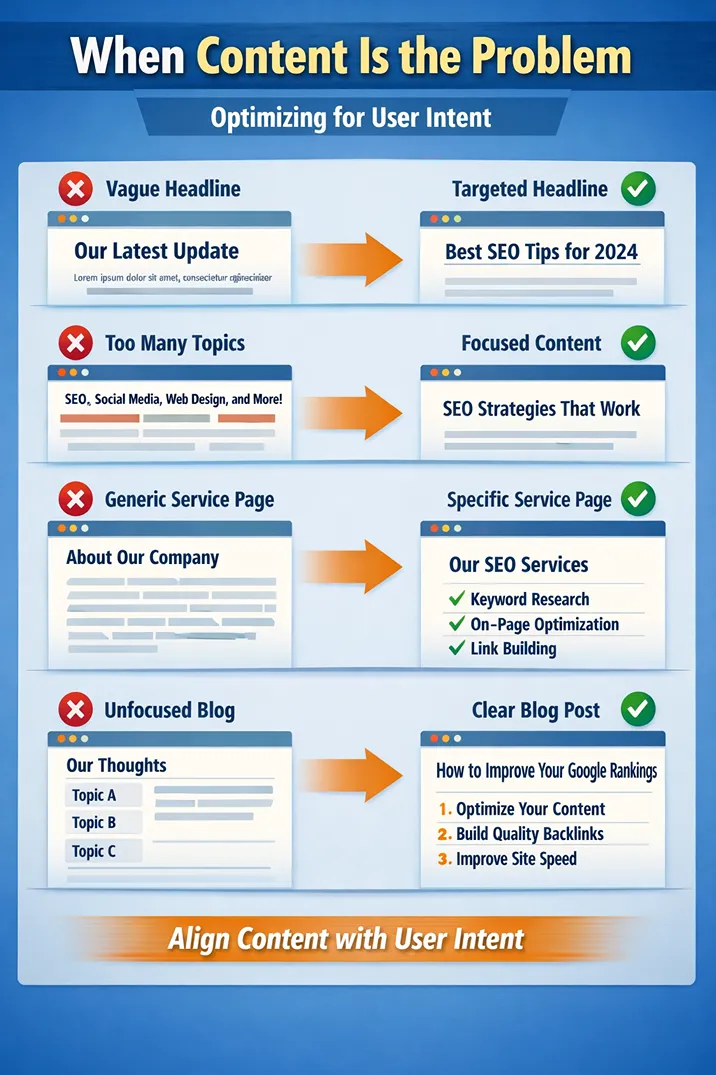
Content optimisation process showing page structure and intent alignment
What to Review When Impressions Rise but Clicks Do Not
When impressions increase without clicks, the goal is not to panic but to diagnose correctly. The first step is identifying whether the issue is visibility quality or presentation.
Key questions to review include:
- Which queries trigger impressions
- Which pages receive the most impressions
- Whether those pages match the query intent
- Whether titles and descriptions reflect that intent
If impressions come from irrelevant queries, the issue is targeting. If impressions come from relevant queries but clicks remain low, the issue is presentation or trust.
Fixing this requires prioritisation. Pages tied to services or enquiries should always be reviewed first. Supporting content should only be adjusted if it affects those pages directly.
Understanding why clicks do not happen prevents wasted effort and keeps changes focused on outcomes rather than metrics alone.